Symbol Probability Mapping: Weighted Reels Shaping Session Lengths and Payout Patterns in Digital Gaming Machines
Petra Klein · Oct 31, 2026
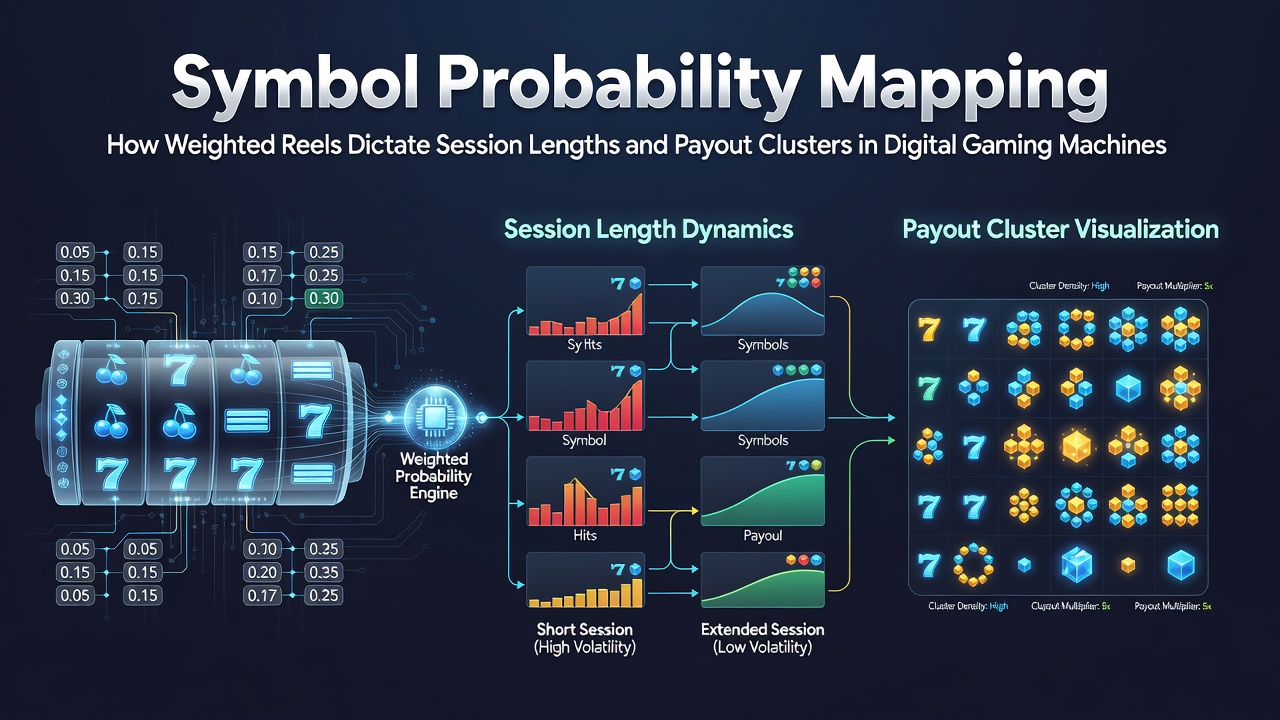
Symbol Probability Mapping: Weighted Reels Shaping Session Lengths and Payout Patterns in Digital Gaming Machines
Digital gaming machines rely on precise symbol probability mapping to determine how often specific icons land on the reels, and this system directly controls both the average length of player sessions and the timing of payout clusters. Engineers assign numerical weights to each symbol on virtual reels, which means certain outcomes occur more frequently than others even though the overall random number generator maintains fairness across millions of spins.
Core Mechanics of Reel Weighting
Each reel strip contains multiple positions, yet developers distribute weights unevenly so high-value symbols receive lower probabilities while lower-value symbols or blanks appear more often. This mapping creates the mathematical foundation for return-to-player percentages, and it also dictates how long a session typically lasts before significant payouts occur. Data from regulatory testing labs show that machines with heavier weighting toward low symbols produce extended sequences of small wins or losses, whereas balanced distributions generate more frequent moderate clusters.
Virtual reels operate independently of physical strips in modern systems, allowing programmers to expand the total number of stops beyond what fits on a physical cylinder. Observers note that this expansion enables fine-tuned control over symbol appearance rates, which in turn influences the distribution of winning combinations across thousands of spins. Studies conducted by independent testing facilities confirm that altering a single symbol's weight by even a few percentage points can shift average session duration by several hundred spins.
How Weighted Reels Influence Session Length
Session length emerges from the cumulative effect of these probability assignments, because players encounter long stretches of non-winning spins when premium symbols carry minimal weights. Operators and analysts track these patterns through aggregated play data, and the resulting metrics reveal that machines tuned for higher volatility tend toward shorter average sessions punctuated by larger but rarer payouts. Conversely, lower-volatility configurations extend play time through steadier, smaller returns.
Regulatory bodies in multiple jurisdictions require documentation of these weight tables before machines receive certification, which ensures the advertised RTP aligns with actual performance over extended test cycles. Figures from North American gaming laboratories indicate that session length variance narrows when weight distributions remain consistent across reel sets, while broader variance appears in titles featuring progressive elements or bonus triggers tied to rare symbol combinations.
Payout Clusters and Probability Mapping
Payout clusters form when weighted reels align multiple winning combinations within a narrow window of spins, a phenomenon directly traceable to how symbols are grouped on the virtual strips. Certain weight configurations create "near-miss" patterns that precede actual wins, concentrating payouts in observable bursts rather than evenly spaced intervals. Research from academic groups examining random number generator behavior demonstrates that these clusters occur more frequently when high-paying symbols share adjacent weight bands on consecutive reels.
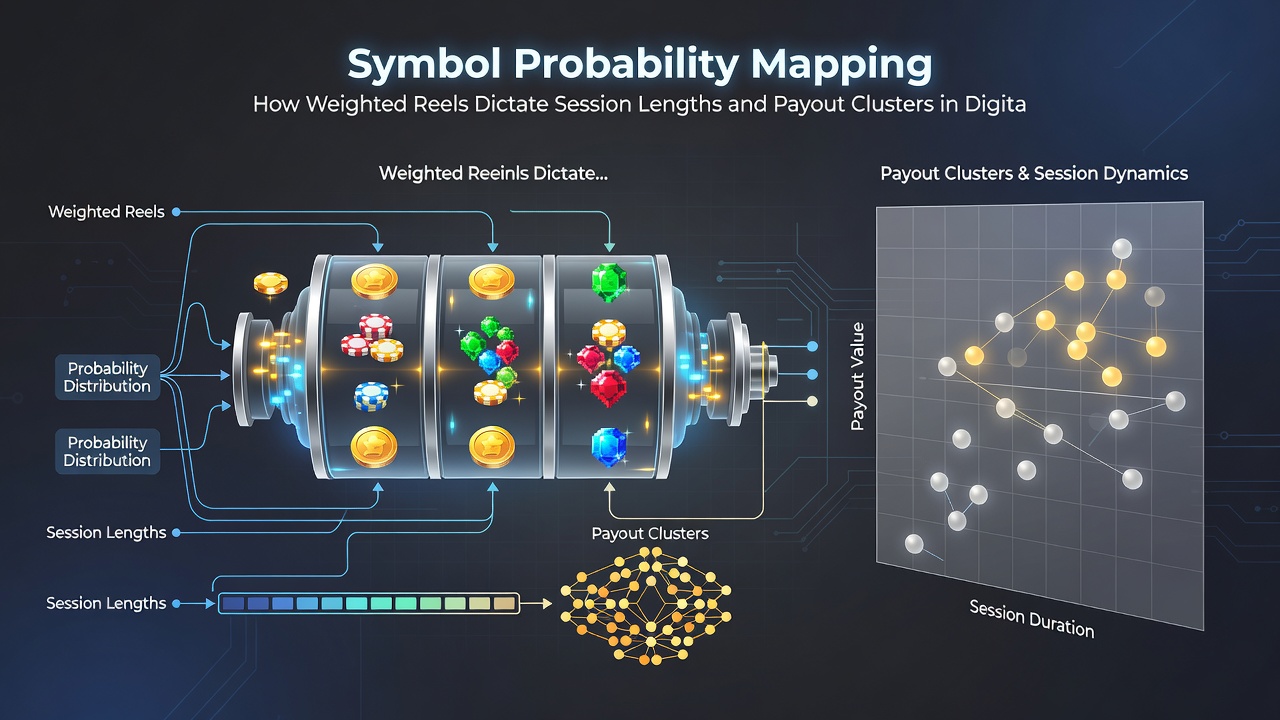
Engineers adjust mapping parameters during development to achieve target volatility profiles, and the resulting data sets show clear correlations between weight concentration and cluster frequency. In one documented case involving multi-reel configurations, increasing the weight of wild symbols on the middle reels produced measurable spikes in consecutive win events within 50-spin windows. Such adjustments allow manufacturers to calibrate player experience without altering the underlying random generation process.
Regulatory and Technical Considerations Through 2026
By October 2026, updated technical standards in several regions require more granular reporting of symbol weight tables as part of ongoing compliance reviews. These requirements stem from efforts to enhance transparency around how probability mapping affects both session metrics and payout distribution. Gaming authorities in the United States and Australia have already begun requesting detailed weight documentation alongside traditional RTP verification, creating standardized datasets that researchers can analyze for cross-jurisdictional patterns.
Industry reports from organizations such as the Nevada Gaming Control Board highlight ongoing refinements in testing protocols that examine cluster behavior under simulated long-term play. Similar work by Canadian regulatory partners focuses on how weighted reels interact with linked progressive systems, producing data that informs both machine certification and player information initiatives.
Analytical Approaches to Mapping Data
Analysts employ statistical modeling to map symbol probabilities across entire reel sets, generating heat maps that visualize where winning combinations cluster most densely. These models incorporate millions of simulated spins and reveal relationships between weight assignments and the standard deviation of session outcomes. University-led research projects have applied machine learning techniques to predict how small weight changes propagate through payout distributions, offering manufacturers predictive tools during the design phase.
Practical applications include optimizing reel layouts for specific market preferences while maintaining compliance with RTP regulations. Data compiled by European testing agencies shows consistent patterns: machines with centralized high-symbol weights on early reels tend to produce front-loaded clusters, whereas distributed weights across all reels generate more uniform payout spacing over time.
Conclusion
Symbol probability mapping through weighted reels serves as the foundational control mechanism for both session duration and payout clustering in digital gaming machines. The technical decisions made during weight assignment directly shape observable play patterns, and regulatory frameworks continue to evolve to capture these dynamics with greater precision. Continued analysis of these systems provides clearer insight into how probability structures govern machine behavior across diverse gaming environments.